What can security hardware actually do?
Flipper, HackRF, Proxmark and programmable pocket computers solve different problems. Follow the hardware, software and accessories to understand the difference.


Start with the question, not the gadget
A pocket-sized enclosure can hide very different instruments. One device exchanges data with contactless tags. Another turns radio signals into samples for software. A third helps a computer talk to a sensor over wires. The interesting part is the relationship between the tool and the system being observed.
For each example, ask four questions: Which physical interface is present? What does the software understand? Is an accessory involved? What evidence supports the result? These questions turn an impressive demonstration into something you can understand and evaluate. This map uses documentation checked on November 12, 2026; it does not report physical testing.
Flipper Zero: a radio is not every protocol
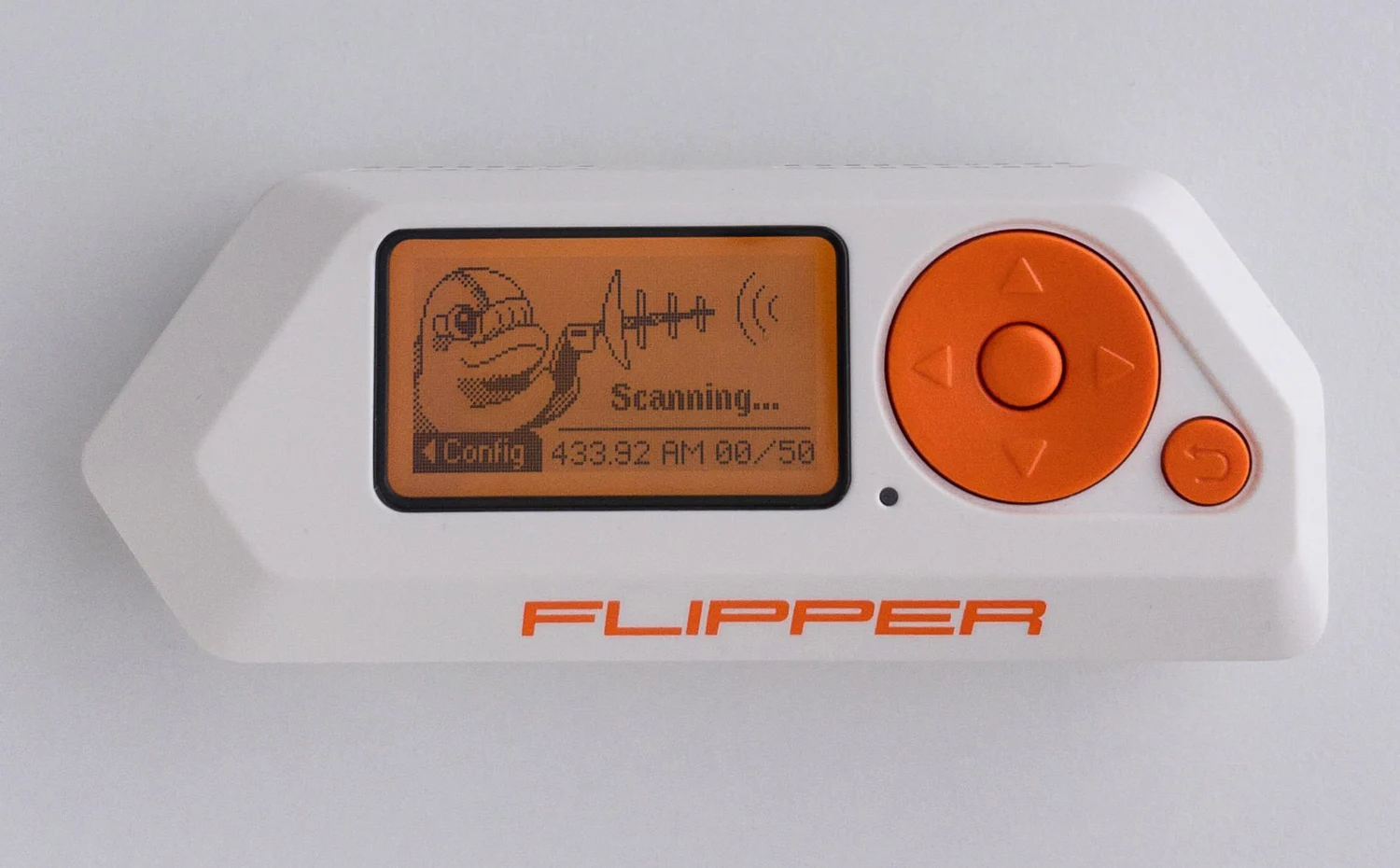
Flipper Zero’s official documentation separates known-protocol decoding, raw signal capture and region-dependent transmission. It explicitly distinguishes the device from a software-defined radio. Detecting a signal and understanding its messages are different achievements. A frequency label does not establish compatibility with a protected system.
The Wi-Fi Developer Board is another useful distinction. It is a separate ESP32-S2-based accessory documented for debugging and firmware development. Its presence in a photograph does not make Wi-Fi a built-in Flipper Zero capability, and a different firmware project can give an accessory a different role.
Follow the exact combination: base device, connected board and software. Sources: Flipper’s signal-reading explanation and Wi-Fi Developer Board documentation.
HackRF: samples first, interpretation in software
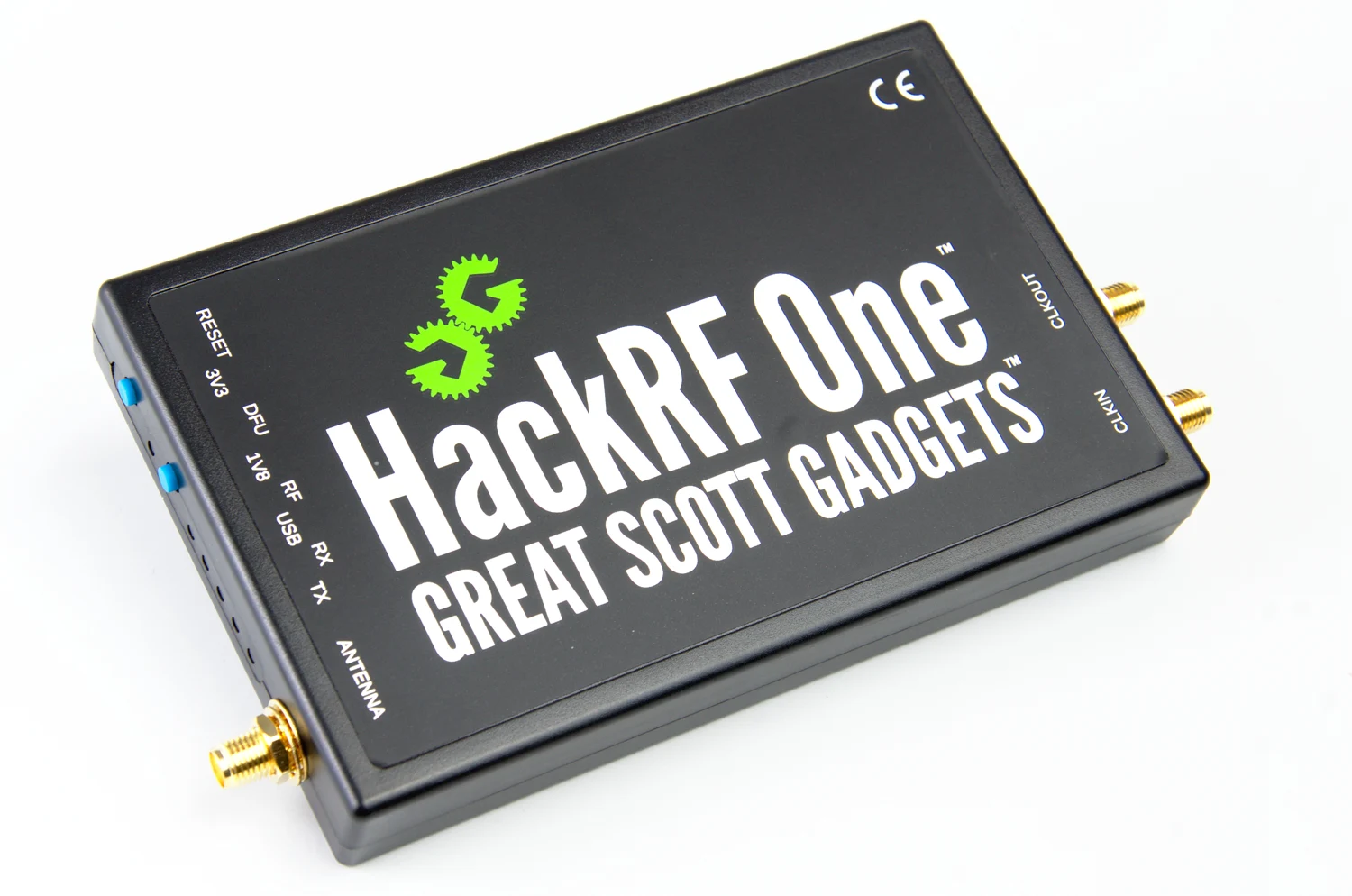
HackRF One is a software-defined radio: it receives or transmits radio signals that software can process. Great Scott Gadgets documents half-duplex operation, meaning it does not transmit and receive simultaneously. Its broad operating range does not mean it automatically decodes every protocol in that range.
HackRF Pro adds hardware changes, but hardware and software have separate timelines. The January 5, 2026 release introduced Pro support initially through a legacy-compatible configuration. Later capabilities must be checked against the release actually being used. A January 16 shipping update also supersedes older preorder wording still visible elsewhere.
Sources: HackRF One, HackRF Pro, release notes and the dated shipping update.
PortaPack adds an interface; firmware defines the experience
HackRF, PortaPack and Mayhem are different layers. The radio handles signals. A PortaPack adds a portable interface. Mayhem is a firmware project with its own applications and supported hardware combinations.
The project identifies H1, H2, H4 and H4M variants. That list is a reason to check an exact revision, not to assume all bundles are interchangeable. A screen showing an application proves that software is present; it does not establish measured performance or universal protocol support. Source: the Mayhem project.
The next step: a Linux computer plus a small controller
Flipper One’s official portal describes an actively developing project. Its firmware architecture gives high-level Linux work to a Rockchip RK3576 processor and display, input, power and boot coordination to a Raspberry Pi RP2350 microcontroller. More processing power does not remove the need to coordinate the small, immediate tasks.
This is a useful direction to follow, with a clear status label. Development documentation establishes an architecture being built; it does not establish a completed retail launch or measured performance. Sources: the development overview and firmware architecture.
Proxmark: the tag, antenna and client all matter
Contactless research involves more than finding a matching frequency. The tag technology, antenna, firmware and computer-side client must work together. Iceman’s Proxmark repository documents several hardware targets, so the product name alone is an incomplete compatibility record.
Its current Proxmark5 section marks firmware as unstable and actively developed. It also describes a UHF antenna add-on as not developed yet. Those are meaningful distinctions: a planned expansion is not a working feature. For learning, begin with an identified sample tag and a documented question about its behavior. Source: Iceman’s hardware and support overview, checked November 12, 2026.
Bus Pirate: where was the signal observed?
Wired tools make communication between components visible. Bus Pirate’s follow-along logic analyzer can capture activity associated with a transaction. Its documentation makes an unusually useful distinction: version 6 has a second buffer for observing pins directly; earlier hardware observes output signals behind the IO buffer.
That changes what a trace can tell you. A picture of intended output is not always the same as an observation at the external connection. Identify the measurement point before interpreting a graph. Sources: the hardware overview and logic-analyzer documentation.
Cardputer and T-Embed: platforms become tools through software
M5Stack’s Cardputer-Adv combines an ESP32-S3-based module, keyboard, display, storage, audio and expansion interfaces. Its IR component is documented as an emitter; do not silently turn that into a receive-and-learn claim. LILYGO’s T-Embed CC1101 combines a processor with separate specialized components.
These are programmable systems. Their applications and accessories decide which tasks become available. Understanding that division is more useful than treating every small computer as the same kind of security appliance. Sources: Cardputer-Adv documentation and T-Embed hardware and examples.
For practical learning, choose your own device or an authorized lab setup. Record the exact hardware, firmware and expected observation. Keep documented capability separate from a result you have actually measured.
Sources & method
Sources checked November 12, 2026. This explainer was prepared with AI assistance from the documentation below. Diagrams are original conceptual illustrations, not wiring instructions. We have not tested this hardware.
- Flipper: reading signals and SDR distinction →
- Flipper: Wi-Fi Developer Board →
- Great Scott Gadgets: HackRF One →
- Great Scott Gadgets: HackRF Pro →
- HackRF firmware releases →
- HackRF Pro shipping update — January 16, 2026 →
- PortaPack Mayhem: supported hardware and firmware →
- Flipper One: development architecture →
- Iceman: Proxmark hardware and support status →
- Bus Pirate: logic-analyzer observation point →
- M5Stack: Cardputer-Adv →
- LILYGO: T-Embed CC1101 hardware and examples →
Your next connection.
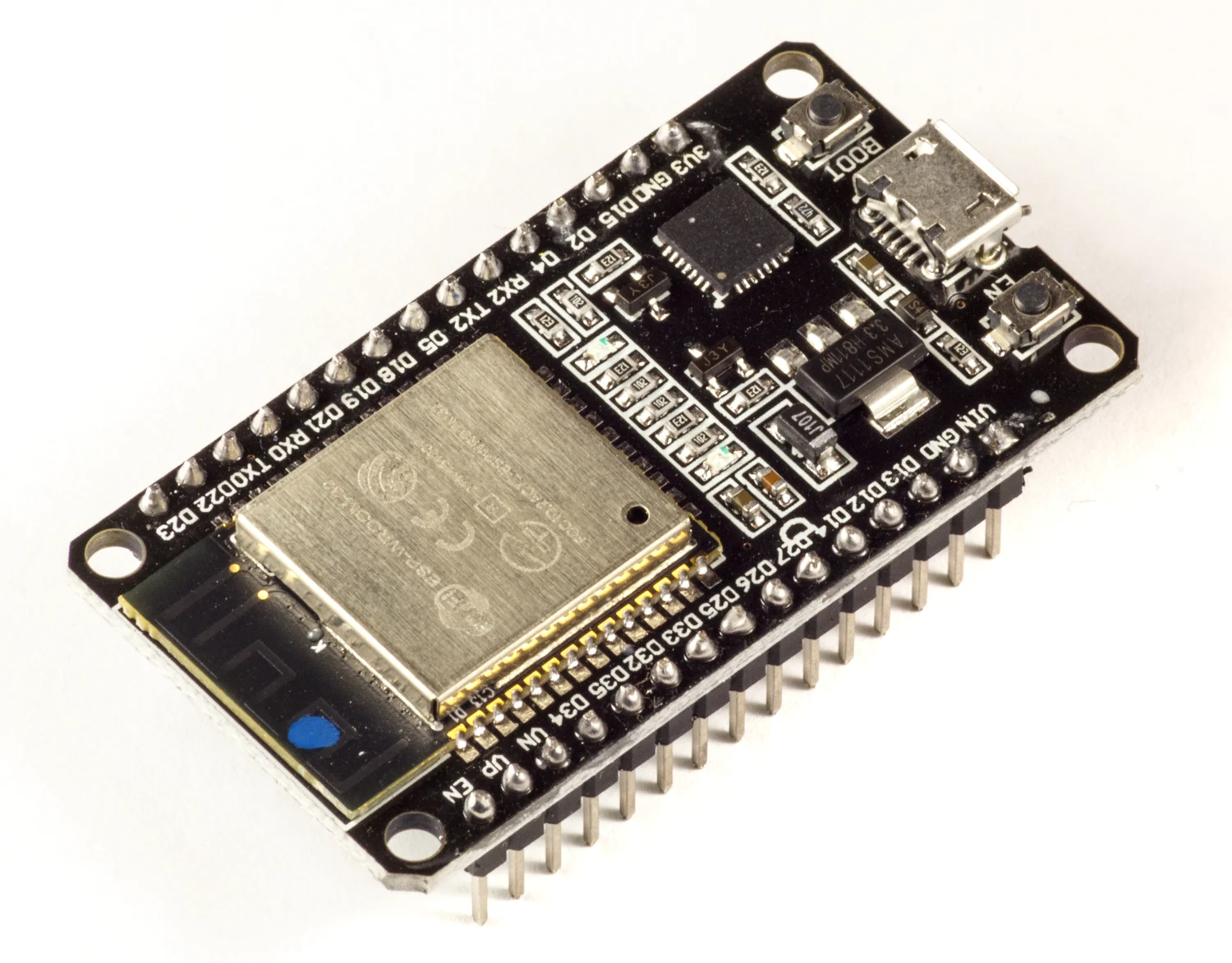 EXAMPLE / ESP32 DEVELOPMENT BOARD
Chip, module, board, device.
Start with four layers. Suddenly the names on a circuit board become easier to understand.
Start here→Understand the connection.
Wi-Fi, NFC and Sub-GHz describe different ways to communicate. Sharing an antenna-shaped silhouette does not make devices compatible.
No prior knowledge→